


Natural Skincare for Hormonal Acne: Why Treatments Fail
Natural skincare for hormonal acne is not about pretending hormones do not matter. It is about using a focused, barrier-conscious routine that helps manage clogged pores, excess oil, and visible irritation while you investigate what is driving recurring breakouts. Conventional treatments can be useful, but they often fall short when the underlying pattern is hormonal, the routine is too irritating, or the treatment does not fit your skin. For broader adult-acne fundamentals, start with Juice Beauty's organic acne treatment guide, then use this article to explore the hormone-linked pattern.
Explore Juice Beauty Blemish Clearing skincare for blemish-prone skin
What Is Hormonal Acne and How Is It Different From Other Adult Breakouts?
Hormonal acne is acne that appears to be influenced by shifts in androgen activity or other hormonal changes. It often returns in a predictable cycle and may affect the lower face, jawline, or neck, but appearance alone cannot confirm the cause. A dermatologist can evaluate persistent, painful, or scarring breakouts.
Acne begins when oil, dead skin cells, and inflammation contribute to a clogged follicle. Hormonal changes can increase oil production or change how your skin responds to normal fluctuations. That can make a blemish routine feel as if it works briefly, then stops working when the next cycle begins.
Common clues that hormones may be part of the pattern
- Breakouts recur around a menstrual cycle or another noticeable hormonal change.
- Inflamed blemishes concentrate around the chin, jawline, lower cheeks, or neck.
- Deep, tender spots continue despite consistent use of a basic acne routine.
- Acne begins or changes after starting, stopping, or changing a medication or contraceptive.
- Breakouts occur alongside other symptoms that deserve medical evaluation, such as irregular periods or increased facial hair.
These clues are not a self-diagnosis. They are useful information to bring to a healthcare professional. Tracking when breakouts appear, what products you use, and whether your skin becomes dry or irritated can make that conversation more productive.
Why Do Conventional Acne Treatments Sometimes Fall Short?
Conventional acne treatments often fall short for hormonal breakouts because many topical products target the follicle or inflammation without changing the hormonal signal that can keep triggering new oil and blemishes. They can also fail when irritation, inconsistent use, antibiotic limits, or an incomplete routine makes the plan difficult to sustain.
This does not mean retinoids, benzoyl peroxide, antibiotics, or salicylic acid are ineffective. The American Academy of Dermatology includes several of these options in its acne guideline. The more accurate lesson is that a treatment can be evidence-based and still be a poor fit for a particular pattern, skin barrier, lifestyle, or medical history.
| Approach | What it can target | Why results may feel limited |
|---|---|---|
| Topical retinoid | Clogged follicles and comedones | Dryness, redness, or poor adherence can make gradual treatment hard to continue; it does not directly remove a hormonal trigger. |
| Benzoyl peroxide | Acne-related bacteria and inflammation | It can be drying or irritating, and it may not prevent hormonally timed oil changes on its own. |
| Antibiotic therapy | Bacteria and inflammation | It needs careful medical direction and is not a complete long-term strategy for every recurring hormonal pattern. |
| Exfoliating acids | Dead skin cells and clogged pores | Using too much, too often, or alongside other actives can weaken the barrier and make skin look more inflamed. |
Four treatment mismatches to consider
- The trigger is not being assessed. If breakouts are deep, cyclical, or suddenly different, product changes alone may not answer the important question.
- The routine is too aggressive. Tightness and stinging are not proof that a product is working. Irritated skin can make it harder to maintain a consistent plan.
- Too many actives are layered. Combining several exfoliants or acne treatments at once can make it impossible to identify what helps or causes a reaction.
- There is no maintenance plan. Acne care often requires steady, repeatable use. Changing products every few days can create a cycle of irritation and uncertainty.
For hormonal therapy options, the American Academy of Dermatology overview explains why a dermatologist may consider a different approach for stubborn lower-face acne.
Which Botanical Actives Can Support Hormonal Acne-Prone Skin?
Botanical skincare can support hormonal acne-prone skin when it combines a targeted pore-care active with ingredients that help the routine feel comfortable enough to use consistently. Look for transparent ingredient lists, gradual use directions, and barrier support. Natural or organic sourcing alone does not prove that a formula will treat acne.
Juice Beauty's Blemish Clearing collection uses salicylic acid from willow bark in its acne serum, along with Green Tea Leaf and a botanical SuperJuice Complex. Salicylic acid is a pore-clearing active, while supportive ingredients can make a targeted routine feel less one-dimensional. Always follow the product label and your healthcare professional's advice.
Ingredients worth understanding
- Salicylic acid from willow bark: helps exfoliate inside the pore and is useful for blemish-prone, oily, and combination skin. See the Blemish Clearing Salicylic Acid Serum for the product's full ingredient list and directions.
- Green Tea Leaf: Juice Beauty identifies it as a supportive ingredient that helps unclog pores and soothe skin with lightweight hydration.
- Aloe and cucumber: these are used in the Blemish Clearing routine's toner-pad formula to support a fresh, comfortable feel.
- Vitamin B3 and licorice root: these ingredients appear in Juice Beauty's Blemish Clearing toner-pad guidance and are associated with tone-supporting and soothing roles in the routine.
- Botanical juices: Juice Beauty's SuperJuice Complex combines grape, apple, aloe, and lemon juices as a base for its formulas.
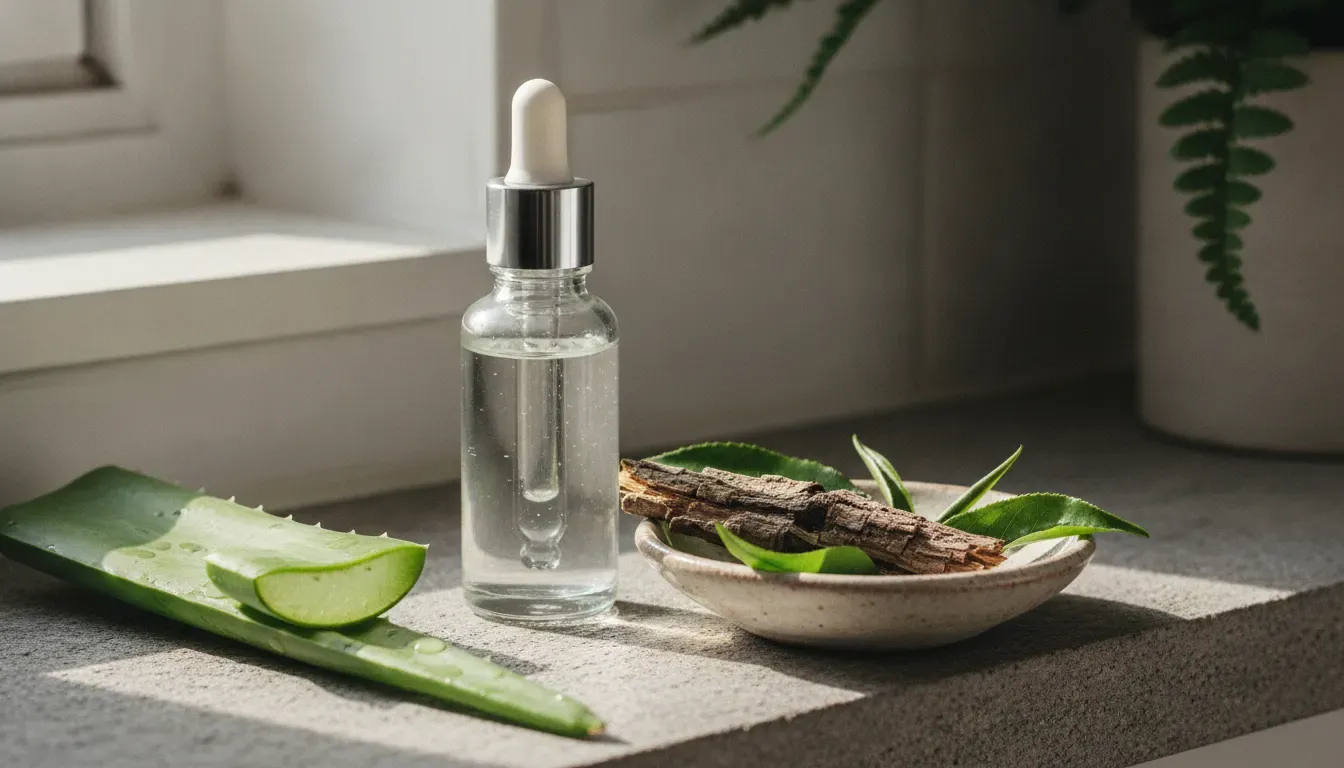
The goal is not to collect every promising ingredient. It is to choose one primary active, use it as directed, moisturize, and watch how your skin responds. If an ingredient causes persistent burning, swelling, or worsening irritation, stop and seek professional guidance.
Shop the Blemish Clearing collection for a focused, botanical acne routine
How Can You Build a Natural Skincare Routine for the Hormonal Acne Cycle?
A natural skincare routine for hormonal acne should be simple enough to repeat before, during, and after a breakout. Start with gentle cleansing, add one targeted blemish active, use a non-heavy moisturizer, and protect exposed skin from the sun. Introduce one change at a time so your skin's response is clear.
Morning
- Cleanse gently. Use lukewarm water and avoid scrubbing, rough brushes, or a cleanser that leaves your skin tight.
- Apply one targeted treatment. Use your chosen product over the face or only where directed. Do not add several new acids at once.
- Moisturize. Acne-prone skin still needs hydration. A comfortable moisturizer can make it easier to stay consistent.
- Finish with sunscreen. Daily sun protection helps reduce the chance that post-blemish discoloration will linger.
Evening
- Remove makeup and cleanse without picking or squeezing blemishes.
- Use the same targeted active only as often as the product directions allow.
- Apply moisturizer to support a comfortable skin barrier.
- Change pillowcases regularly and clean items that touch your face, such as phones and makeup brushes.
Juice Beauty describes its Blemish Clearing approach as a three-step cleanse routine: cleanser, serum, and Oil-Free Moisturizer. You can review the Blemish Clearing Cleanser and compare the full routine with your skin's needs. The right routine is the one you can follow without constant stinging, peeling, or product switching.
Track the pattern, not just the product
Hormonal breakouts are easier to discuss when you have a record of what your skin is doing. A quick note in your phone or journal can capture the date, location, tenderness, dryness, and products used. Avoid rating a new formula after one night. Instead, look for a consistent pattern over time while following the label.
- Note whether blemishes appear before, during, or after a menstrual cycle.
- Record every active product and how often you use it.
- Track stinging, peeling, tightness, or new sensitivity.
- Photograph your skin in similar lighting if that feels useful.
This log can help you separate a recurring trigger from a reaction to a new formula. It can also help a dermatologist see which approaches you have already tried, reducing the temptation to start several products at once.
When Should You See a Dermatologist Instead of Managing Acne at Home?
See a dermatologist when acne is painful, deep, scarring, rapidly changing, or not improving with a consistent routine. Professional care is also important when breakouts may relate to medication, pregnancy, breastfeeding, irregular periods, or another health concern. Botanical skincare can support daily care, but it cannot diagnose or treat every cause.
- Book an appointment for deep or tender breakouts, scarring, or dark marks that keep multiplying.
- Ask for help if you have tried a steady routine for several weeks without improvement.
- Bring a list of products, medications, supplements, and the timing of your breakouts.
- Ask about safe options if you are pregnant, breastfeeding, or trying to become pregnant.
- Seek prompt care for a severe reaction, facial swelling, widespread rash, or significant pain.
Juice Beauty's salicylic-acid serum page specifically advises against use during pregnancy, breastfeeding, or while trying to become pregnant. That product-specific warning is a reminder to check every label rather than assuming a botanical formula is automatically appropriate for every life stage.
Frequently Asked Questions About Natural Skincare for Hormonal Acne
Can natural skincare get rid of hormonal acne?
Natural skincare may help manage clogged pores, excess oil, and visible irritation, but it cannot guarantee that hormonal acne will disappear. A gentle routine can support the skin while a dermatologist evaluates recurring or painful breakouts and considers whether medical treatment is appropriate.
Why does my acne keep coming back even when a product works?
A product may improve clogged pores or inflammation without changing the hormonal pattern that triggers new breakouts. Irritation, inconsistent use, product changes, and an unassessed medication or health factor can also make improvement feel temporary.
Is salicylic acid a natural acne ingredient?
Salicylic acid is an acne-care active, and Juice Beauty's Blemish Clearing Serum describes its salicylic acid as sourced from willow bark. Source does not remove the need to follow directions. Start gradually, avoid stacking too many exfoliating products, and check pregnancy or breastfeeding warnings.
Should I stop conventional acne treatment if I want organic skincare?
Do not stop a prescribed treatment without speaking with the clinician who recommended it. Organic skincare can be part of a supportive routine, but the best plan depends on acne severity, skin tolerance, medical history, and treatment goals.
How long should I try a new hormonal-acne routine?
Give a routine enough time to evaluate, use it exactly as directed, and avoid changing several products at once. If acne is painful, scarring, rapidly worsening, or not improving, ask a dermatologist rather than extending an ineffective routine indefinitely.
Find a gentle starting point with Juice Beauty Blemish Clearing skincare
This article is educational and is not medical advice. Acne treatment should be individualized with a qualified healthcare professional. Review each product label for current directions and warnings.