


Organic Acne Treatment for Adults: A Practical Guide
What to Know About Organic Acne Treatment for Adults
Organic acne treatment for adults can be thoughtful, gradual, and barrier-conscious.
Explore the Blemish Clearing collection for acne-prone skin
Adult breakouts can be frustrating, especially when skin feels dry or sensitive at the same time.
An organic acne treatment for adults should address blemish-prone skin without treating every complexion as if it were the same. Hormonal shifts, stress, friction, and product changes can influence when breakouts appear.
The underlying process still involves follicles becoming clogged with oil and dead skin cells. Juice Beauty's Blemish Clearing collection gives shoppers a focused place to explore acne-prone skincare and mineral sun-care options.
This guide explains how to compare formulas, introduce one active, and protect your skin barrier.
An organic acne treatment for adults combines thoughtfully sourced ingredients with evidence-aware care. Choose one targeted active, introduce botanical formulas gradually, and support the skin barrier with gentle cleansing, moisturizing, and sunscreen. Juice Beauty's Blemish Clearing line offers a focused starting point for shoppers who want organic botanicals without a one-size-fits-all promise.
The best place to begin is not with the strongest product on the shelf. It is with a clearer understanding of adult acne, ingredient function, and the habits that help skin stay comfortable while you evaluate what works.
Why Does Adult Acne Need a Different Approach?
Adult acne may persist or begin later in life as hormones, stress, friction, and product routines change. It can appear alongside dryness or sensitivity. A barrier-conscious routine uses targeted care gradually, while professional guidance helps when breakouts are painful, scarring, widespread, or difficult to identify.
Acne does not always end with adolescence. For many adults, breakouts appear or continue as skin, hormones, stress levels, and daily routines change. Hair follicles can become clogged when sebum and dead skin cells build up. The National Institute of Arthritis and Musculoskeletal and Skin Diseases notes that acne can affect the face, back, chest, and shoulders. Learn how acne develops from NIAMS.
Adult acne may be more persistent than occasional teenage blemishes. It can recur around the lower face and jawline, while the rest of the complexion feels tight or reactive. That combination changes how you evaluate a product. A routine that removes oil aggressively may leave the surrounding skin uncomfortable, which can make it harder to stay consistent.
Pattern can guide observation, but it is not a diagnosis
Breakout patterns can help you notice changes, but they cannot confirm a cause. Stress, sleep disruption, sweat, friction from clothing or equipment, and new makeup or skincare may coincide with flare-ups. Hormonal fluctuations may also influence oil production and inflammation. These are possible contributors, not proof that one habit or hormone explains every blemish.
Small uniform bumps, burning, itching, or marked redness may have explanations other than acne. Treating every bump with stronger acne products can further disrupt a sensitive barrier. If the pattern is new or difficult to identify, professional guidance is more useful than adding another active.
When to involve a dermatologist
Seek dermatology advice when breakouts are painful, deep, widespread, scarring, persistent despite consistent care, or difficult to identify. Also ask for guidance if a product causes significant burning, swelling, or a worsening rash. A dermatologist can distinguish acne from lookalikes and create a plan suited to your skin and health history.
What Conventional Acne Treatments Do
Clean beauty shoppers deserve a clear explanation of conventional acne care, not a caricature. Benzoyl peroxide, salicylic acid, and adapalene target different parts of the acne process. A dermatologist may recommend one based on symptoms, skin sensitivity, medical history, and the type of lesions present.
Adults exploring organic options often want to know how these ingredients work and what irritation can look like. That is a reasonable question. Conventional does not automatically mean harmful, and an organic source does not automatically prove that a formula is safer or more effective. The useful comparison is the full formula, its intended use, and how your skin responds.
| Ingredient or approach | What it is commonly used for | What to consider |
|---|---|---|
| Salicylic acid | Helping loosen buildup inside pores | Introduce gradually if skin is dry or sensitive |
| Benzoyl peroxide | Targeting acne-causing bacteria and inflammation | May feel drying or irritating for some people |
| Adapalene | Supporting consistent acne treatment over time | Use according to professional or label guidance |
| Botanical formulas | Pairing plant-derived ingredients with a clean-beauty preference | Evaluate the finished formula, not the label alone |
Products can also conflict when several exfoliating or treatment steps are layered. If you are changing routines, make one adjustment at a time. That gives you a better chance of noticing whether a product is helpful, irritating, or simply unnecessary.
Some adults also balance blemish care with makeup, shaving, exercise, or a busy schedule. A routine is more useful when it fits real life. Choose textures you will apply consistently, keep steps easy to remember, and avoid judging a product after one use. Consistency does not mean ignoring discomfort. It means giving a reasonable routine time while responding promptly to clear signs of irritation.
How to Choose an Organic Acne Treatment for Adults
Choose an organic acne treatment for adults by evaluating the finished formula, its intended function, and its directions. Start with one targeted active, introduce it gradually, and keep cleansing and moisturizing gentle. Organic sourcing can support your values, but tolerance and consistent use still determine whether a product fits.
Organic and botanical ingredients can be part of a thoughtful blemish routine, but the word organic is not a performance guarantee. Organic describes sourcing or formulation standards. It does not mean that a product will suit every skin type or resolve every breakout. A useful formula still needs a clear purpose, sensible directions, and ingredients that your skin can tolerate.
Focus on function instead of an ingredient story
Salicylic acid is commonly used to help loosen pore-clogging buildup. Juice Beauty's Blemish Clearing line uses salicylic acid derived from willow bark in formulas designed for acne-prone skin. The product label remains the authority for directions. Do not assume that a botanical source changes how an active behaves or removes the need to introduce it carefully.
Other botanical ingredients may contribute antioxidant, soothing, or conditioning support. Those roles are different from treating acne directly. A product can have a compelling plant-based story and still be a poor match for irritated skin. Fragrance, essential oils, exfoliation, or a particular preservative system may affect tolerance.
Read the ingredient list in context. A cleanser that rinses away may play a different role from a leave-on serum. A leave-on active also deserves more careful pacing because it remains on the skin longer. Consider where a product fits in your routine, how often the label directs you to use it, and whether other products add overlapping exfoliation.
Skin comfort is useful feedback, not a test of willpower. Mild, temporary adjustment can be difficult to interpret, while ongoing burning, swelling, or a worsening rash deserves a pause and professional advice. Keep the rest of your routine steady while assessing a new product. That simple choice reduces guesswork and makes your observations more useful.
Evidence and comfort belong in the same decision
When comparing an organic acne treatment for adults, ask three practical questions. What is the product intended to do? What directions and cautions does the label provide? Can you use it consistently without persistent discomfort? These questions keep clean-beauty preferences connected to real skin behavior.
For a broader explanation of how salicylic acid and retinol differ, read Juice Beauty's guide to salicylic acid and retinol. The comparison can help prevent unnecessary layering, especially when adult skin is already dry or reactive.
How the Blemish Clearing Approach Fits a Gentler Routine
Juice Beauty's Blemish Clearing line is designed for shoppers who want acne-focused skincare with organic botanicals. The line includes a cleanser and a salicylic acid serum. The cleanser is intended to remove excess oil, dirt, and makeup. The serum provides a targeted step for blemish-prone skin.
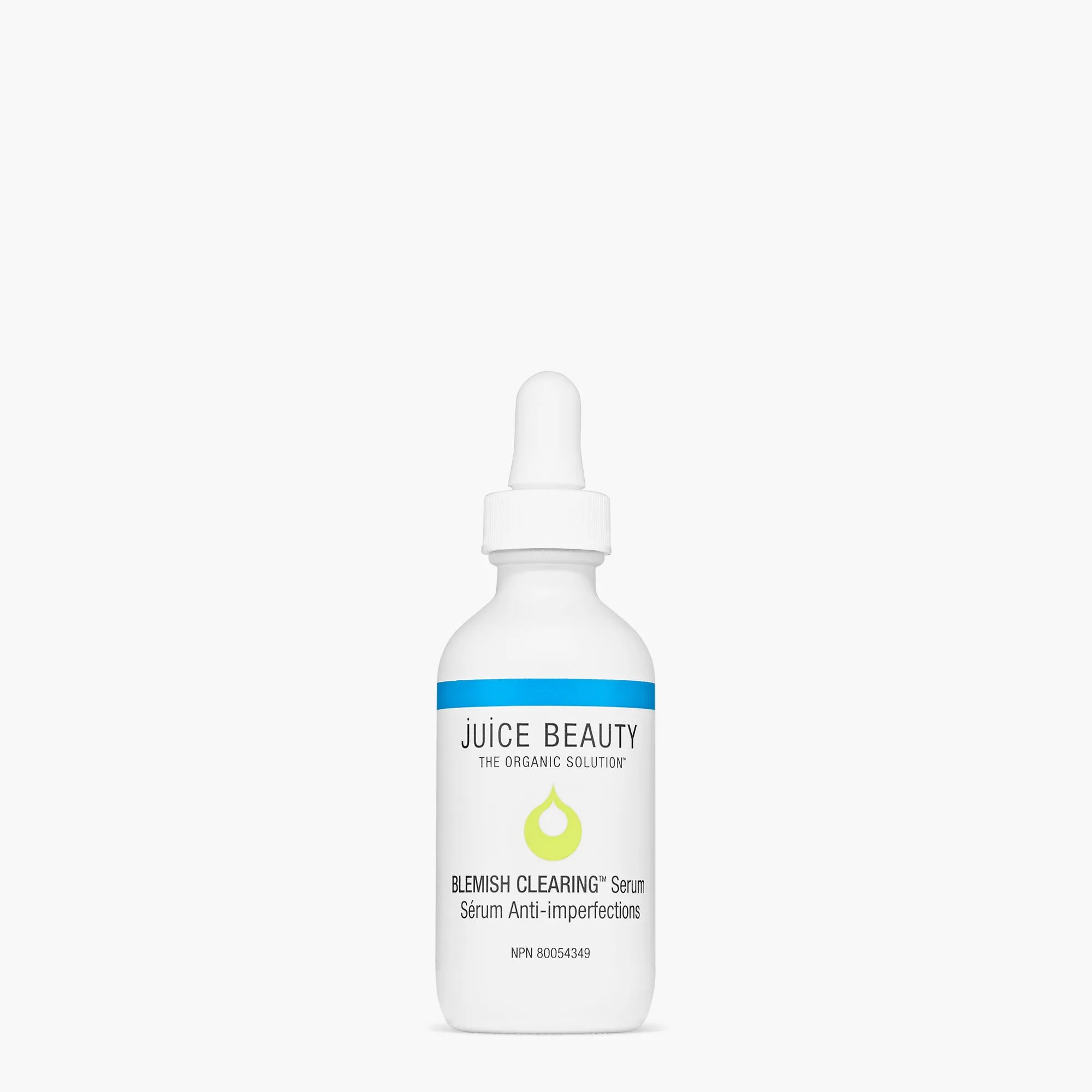
Use product directions as the starting point rather than copying a routine from someone else. If you are new to an active, begin with one targeted product. Avoid introducing a cleanser, serum, peel, retinoid, and spot treatment at the same time. A slower rollout makes it easier to identify what your skin supports.
Juice Beauty pairs its organic positioning with performance-minded skincare across its range. That balance matters for clean-beauty shoppers. The goal is not to claim that a botanical formula works for everyone. The goal is to offer a focused option, clear product information, and a routine that leaves room for individual skin needs. For the wider cluster topic, explore the Blemish Clearing and mineral SPF collection. This collection page is the closest live cluster destination for the broader acne and sun-care topic.
Shop Blemish Clearing skincare for blemish-prone skin
How Organic Acne Treatment for Adults Supports the Skin Barrier
A barrier-conscious routine pairs one targeted acne active with gentle cleansing, moisturizer, and morning sunscreen. This approach can reduce unnecessary irritation and make consistent use easier. If burning, swelling, or a worsening rash continues, stop the product and seek professional advice.
A barrier-conscious routine can be simple. Adults often get better information from a small, consistent routine than from several new products introduced at once. The aim is to use one targeted active while keeping cleansing, moisture, and sun protection comfortable.
- Cleanse gently. Use lukewarm water and a mild cleanser in the morning and evening. Remove sunscreen, makeup, sweat, and daily buildup without scrubbing. Cleanse after sweating when practical.
- Choose one targeted active. Start with one acne-focused product. Salicylic acid may help loosen pore buildup. Follow the label directions for the specific product you choose.
- Moisturize. Apply a moisturizer that feels comfortable after treatment. Hydration does not require a heavy texture. If skin feels persistently tight, flaky, or stinging, scale back.
- Use sunscreen in the morning. Apply broad-spectrum sunscreen as the last morning skincare step. Reapply according to the product directions, especially when outdoors.
- Patch test and change one thing at a time. Test new products as directed. A gradual approach makes it easier to separate irritation from a normal adjustment period.
- Track patterns. Note product changes, use frequency, affected areas, and comfort. Stop and seek advice for a serious or persistent reaction.
Juice Beauty's three-step clear skin routine offers another practical reference for keeping a regimen manageable. For product selection, compare the Blemish Clearing Salicylic Acid Serum with the needs of your own skin instead of treating a routine as universal. Readers can also review four tips for blemish-prone skin when building consistent habits.
When Home Care Is Not Enough
An organic acne treatment for adults can support a personal skincare routine, but it should not replace a diagnosis when symptoms are severe or unusual. Professional guidance is especially important for painful nodules, scarring, sudden changes, or breakouts that do not improve with consistent care.
Respond to irritation instead of pushing through
Persistent burning, swelling, intense redness, or a worsening rash is a reason to stop and ask for help. More product is not always more effective. A dermatologist can help determine whether the issue is acne, irritation, an allergy, or another skin condition.
Clean beauty and informed care can coexist. The strongest routine is the one that respects your preferences while remaining realistic about ingredient function, personal tolerance, and the need for medical advice when appropriate.
Frequently Asked Questions About Organic Acne Treatment for Adults
What is the best organic treatment for acne?
There is no single best option for every complexion. Look for a product with a clear purpose, transparent directions, and ingredients your skin can tolerate. A gentle cleanser, one targeted active, moisturizer, and sunscreen can form a practical starting structure. Persistent or severe acne deserves professional evaluation.
How do I clear my acne naturally?
Start with consistent, gentle care rather than trying many remedies at once. Cleanse without scrubbing, introduce one targeted product gradually, moisturize, and use sunscreen. Botanical ingredients may fit a clean-beauty preference, but natural sourcing does not guarantee that a product will suit your skin or treat every cause of acne.
Why does adult acne differ from teenage acne?
Adult acne may be influenced by changing hormones, stress, sleep, friction, and product routines. It may also occur alongside dryness or sensitivity. Those differences can affect product tolerance and consistency. A pattern can suggest what to discuss with a dermatologist, but it cannot establish a diagnosis on its own.
What ingredients should adults look for in organic acne treatment?
Look for ingredients with a defined role, such as salicylic acid for helping loosen pore buildup, alongside supportive cleansing and moisturizing ingredients. Review the complete formula and label directions. If you are adding an active, introduce it gradually and avoid layering several potentially irritating treatments at once.
Can organic skincare effectively treat adult acne?
Organic skincare can be part of an adult acne routine when the finished formula suits your skin and the product is used as directed. Organic status alone does not prove effectiveness. Evaluate ingredient function, comfort, consistency, and results. Ask a dermatologist for help when acne is painful, scarring, widespread, or persistent.
A Practical Next Step for Blemish-Prone Skin
Choosing an organic acne treatment for adults does not require choosing between clean beauty and thoughtful skincare. Start with a focused routine, introduce changes gradually, and pay attention to comfort as well as blemishes. If you want to explore a product-line approach, review Juice Beauty's Blemish Clearing collection and its product directions.