


How to Fade Hyperpigmentation Naturally: Step-by-Step
How to Fade Hyperpigmentation Naturally: Step-by-Step
To fade hyperpigmentation naturally, identify what is triggering excess pigment, use gentle brightening ingredients, protect your skin with mineral SPF, and stay consistent long enough to see gradual change. The goal is not to strip or bleach your complexion. It is to reduce repeated triggers while supporting a more even-looking tone.
Explore Juice Beauty brightening skincare for dark spots and uneven tone
Hyperpigmentation is common, but the most effective routine depends on the type of discoloration and your skin's tolerance. A mark left after a blemish needs a different conversation from melasma or sun-related spots. This guide explains a measured, naturally positioned approach for health-conscious shoppers who want visible results without an aggressive routine.
What Hyperpigmentation Actually Is and Which Types Respond Best to a Natural Routine
Hyperpigmentation is an area of skin that looks darker because it contains more melanin than the surrounding skin. Extra pigment can follow sun exposure, hormonal changes, inflammation, irritation, or an injury. The cause matters because stopping the trigger is often the first step toward preventing new discoloration.
The American Academy of Dermatology Association explains that dark spots can appear after acne, wounds, irritation, medication effects, or hormonal changes. Learn more about dark spots and their causes before choosing a treatment plan.
| Pattern | What it may look like | Useful first focus |
|---|---|---|
| Post-inflammatory hyperpigmentation | A flat brown, gray, or darker mark left after a blemish, rash, or irritation | Reduce the original inflammation and avoid picking, scrubbing, or introducing irritating products |
| Sun-related discoloration | Spots or uneven tone on areas that receive regular sunlight | Daily broad-spectrum mineral SPF, shade, protective clothing, and a gentle brightening routine |
| Melasma-like patches | Larger, uneven patches that often appear symmetrically on the face | Consistent sun and visible-light protection, gentle care, and professional guidance when needed |
| Temporary dullness | A generally less luminous or uneven-looking complexion without distinct spots | Barrier-supportive hydration, mild exfoliation if tolerated, and a steady routine |
These patterns can overlap, and a table cannot diagnose a skin condition. If discoloration is new, rapidly changing, painful, itchy, raised, or not responding to gentle care, consult a dermatologist rather than escalating home treatments.
Step 1: How Do You Identify the Cause of Your Dark Spots?
Start by looking for a repeatable trigger instead of immediately adding more products. A short observation period can reveal whether marks follow breakouts, hair removal, a new formula, sun exposure, or hormonal changes. Photographing your skin in the same natural light once a week can make gradual changes easier to judge.
- Review recent breakouts: A flat mark that follows a blemish may be post-inflammatory hyperpigmentation. Prioritize calming the breakout and leave the mark alone while it heals.
- Notice irritation: Stinging, burning, tightness, redness, or peeling can signal that a product is damaging your barrier. Pause the newest irritant and simplify your routine.
- Map sun exposure: Spots on the forehead, cheeks, upper lip, or hands may become more noticeable after unprotected sunlight. Treat daily sun protection as part of the brightening routine.
- Consider hormonal timing: Symmetrical patches that change during pregnancy or other hormonal shifts may resemble melasma. A dermatologist can help distinguish melasma from other causes.
- Check medications and medical history: Some medicines and conditions can affect pigmentation. Do not stop a prescribed medicine without speaking with the clinician who prescribed it.
Do not use a homemade acid, abrasive scrub, undiluted essential oil, or harsh bleaching mixture as a shortcut. Irritation can create more post-inflammatory discoloration, especially when the skin is already reactive. Natural does not automatically mean gentle, and gentle does not mean ineffective.
For a broader explanation of dark-spot triggers, read the Organic Brightening and Dark Spot Correction with Green Apple and Vitamin C guide. This article takes the next step by focusing on a practical fading routine.
Step 2: Which Organic Brightening Actives Can Support More Even-Looking Skin?
Choose one targeted brightening product and introduce it gradually. The best natural routine is one you can use consistently without persistent burning or peeling. Look for well-formulated ingredients with a clear role, such as vitamin C derivatives, antioxidant-rich botanical juices, and mild fruit-derived acids.
Vitamin C and stable vitamin C derivatives
Vitamin C is valued for antioxidant support and a brighter-looking complexion. Juice Beauty's Green Apple ProBright 20% Vitamin C Serum uses ascorbyl glucoside, a stable vitamin C derivative, with organic green apple juice, aloe, vitamin E, ferulic acid, hyaluronic acid, and natural AHAs. The product is positioned for hyperpigmentation, dull skin, uneven tone, texture, and fine lines.
Start with a small amount on clean, dry skin according to the product directions. If your skin is sensitive, apply it every other morning before increasing frequency. A brightening serum should complement, not compete with, a barrier-supportive moisturizer and sunscreen.
Fruit-derived acids and gentle exfoliation
Malic acid from organic green apples and other natural AHAs can help loosen the buildup that makes skin look rough or dull. Exfoliation should be measured. Using several acids at once can cause irritation, and irritation can make uneven tone look worse.
Do not combine every brightening product in one routine. Begin with one serum or moisturizer, use it consistently, and wait before adding another exfoliating step. If your skin feels hot, raw, persistently tight, or unusually sensitive, stop the active and return to gentle cleansing, moisturizing, and SPF.
Antioxidant-rich botanical ingredients
Juice Beauty formulas use the SuperJuice Complex, an antioxidant-rich blend of botanical juices that replaces conventional water or petroleum filler bases in the brand's positioning. In a routine for uneven tone, the value is a formula designed to deliver brightening support alongside hydration rather than relying on harshness as proof of activity.
For ingredient-label context, the article organic versus clean and natural beauty explains why shoppers should evaluate the whole formula, certifications, and performance instead of treating one marketing word as a guarantee.
Shop the Green Apple brightening collection for a targeted, gentle routine
Step 3: Why Is Mineral SPF the Step Most People Skip?
Sun protection is not an optional finishing touch when you are trying to fade dark spots. Ultraviolet exposure can deepen existing discoloration and create new uneven tone. Visible light can also matter for some forms of hyperpigmentation, which is why a dermatologist may recommend a tinted sunscreen containing iron oxides for certain skin tones.
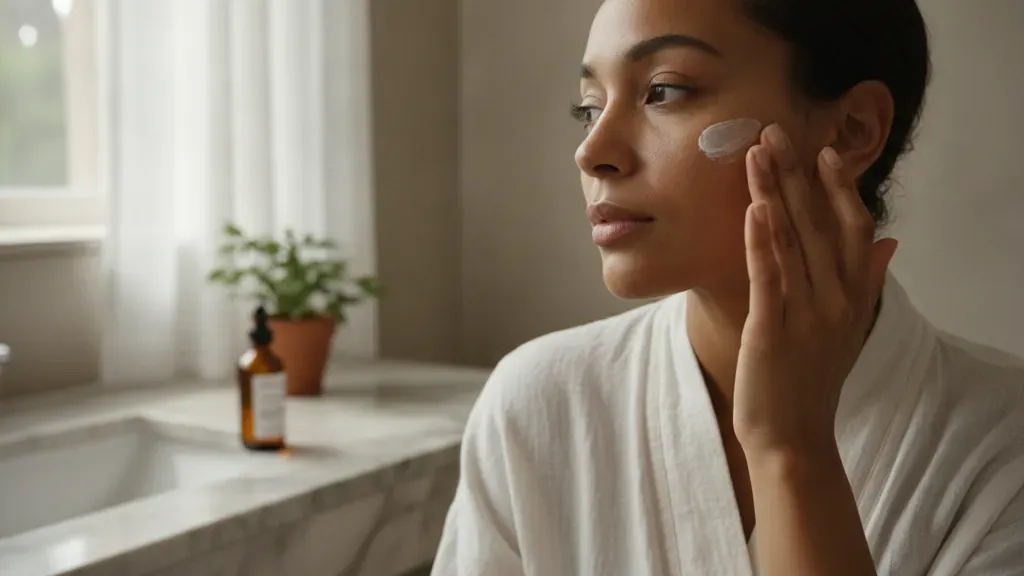
Use a broad-spectrum mineral sunscreen every morning on exposed skin. Juice Beauty's SPF 30 Oil-Free Moisturizer uses zinc oxide and is designed as a lightweight mineral moisturizer for oily, combination, and acne-prone skin. Apply it as directed on the product label, and reapply as recommended when you are outdoors, sweating, or swimming.
- Apply SPF as the last step of your morning skincare routine.
- Cover commonly missed areas, including the ears, neck, hairline, and backs of the hands.
- Use a hat, sunglasses, shade, or protective clothing during extended outdoor time.
- Do not rely on an SPF claim from makeup alone if you are trying to protect active discoloration.
- Remember that sunscreen helps prevent darkening, but it does not erase an existing mark overnight.
Daily protection also makes it easier to judge whether your brightening routine is working. Without it, new pigment may appear while older marks are fading, creating the impression that nothing is changing.
Step 4: How Long Does Natural Hyperpigmentation Care Take?
Most brightening routines require patience. Use six to twelve weeks as a realistic checkpoint for evaluating a consistent routine, not as a promise that every mark will disappear in that time. The pace depends on the cause, depth of pigment, skin tone, ongoing sun exposure, inflammation, and how well your skin tolerates the chosen products.
Track progress without judging your skin day to day. Take one photograph each week in the same room, at the same time, without a filter. Note new breakouts, irritation, outdoor exposure, and product changes. A simple log can reveal whether a product is helping, doing nothing, or causing a cycle of irritation.
A simple morning routine
- Cleanse gently: Remove overnight sweat and residue without scrubbing.
- Apply one brightening treatment: Use a vitamin C derivative or another product selected for your skin's tolerance.
- Moisturize: Use a lightweight formula if you are oily or a richer barrier-supportive formula if you are dry.
- Protect: Finish with broad-spectrum mineral SPF and add shade or clothing outdoors.
A simple evening routine
- Cleanse: Remove sunscreen and makeup thoroughly but gently.
- Treat selectively: Use a nighttime brightening or exfoliating product only as directed.
- Moisturize: Support comfort and hydration so the routine remains sustainable.
Juice Beauty's Green Apple Age Defy Serum is positioned as a nighttime brightening treatment for the appearance of dark spots, discoloration, uneven tone, dullness, and signs of aging. The Green Apple Brightening Emulsion is a lightweight moisturizer designed to hydrate while supporting a brighter, more even-looking complexion. Choose products based on your skin's needs rather than layering every product in the line.
How Should You Adjust the Routine for Sensitive, Dry, or Blemish-Prone Skin?
Skin concern and skin tolerance are equally important. A routine that looks ideal on paper can fail if it causes irritation. Make one change at a time, patch test as appropriate, and give your skin enough time to show whether it is comfortable.
- Sensitive skin: Start with a fragrance-free, gentle cleanser and moisturizer. Introduce the brightening active once or twice weekly, and stop if burning persists.
- Dry or dehydrated skin: Prioritize hydration and barrier comfort before increasing exfoliation. A tight, flaky surface can make uneven tone look more pronounced.
- Blemish-prone skin: Avoid picking at breakouts, because injury can leave a darker mark. Select non-greasy textures and address active blemishes with a routine designed for that concern.
- Deeper skin tones: Be especially cautious with irritation and seek professional guidance if marks keep appearing after minor inflammation. Preventing new pigment is as important as fading old pigment.
If you are comparing ingredient lists, the guide to organic versus clean and natural beauty labels can help you read formulas more thoughtfully. It should not replace individualized medical advice or a dermatologist's assessment.
Build a Green Apple brightening routine for a more even-looking complexion
Frequently Asked Questions About Fading Hyperpigmentation Naturally
Can hyperpigmentation fade naturally without products?
Some post-inflammatory marks become lighter after the original irritation or breakout stops, but fading can take time. Daily mineral SPF and a gentle routine can help prevent additional darkening while your skin recovers. If marks persist, multiply, or change, seek professional guidance instead of repeatedly adding stronger products.
What is the best natural ingredient for hyperpigmentation?
There is no single best ingredient for every cause or skin type. Stable vitamin C derivatives, antioxidant-rich botanicals, and gentle fruit-derived acids can support a brighter-looking complexion when used in a well-formulated product. Your best choice is the active you can tolerate consistently without irritation.
Does vitamin C help fade dark spots?
Vitamin C can support a brighter, more even-looking complexion through antioxidant and brightening activity. Juice Beauty's Green Apple ProBright Serum uses ascorbyl glucoside, a stable vitamin C derivative, alongside hydrating and antioxidant ingredients. Follow the product directions and use SPF every morning.
Can lemon juice remove hyperpigmentation?
Do not apply lemon juice directly to your skin as a home treatment. Its acidity can irritate the skin and may increase the risk of discoloration, especially with sun exposure. Choose a professionally formulated product with a measured ingredient system instead.
How long does it take for dark spots to fade?
Many people need several weeks of consistent, gentle care before they can evaluate a change. Six to twelve weeks is a useful checkpoint, but it is not a guarantee. The underlying cause, pigment depth, skin tone, sun exposure, and irritation history all influence the timeline.
When should I see a dermatologist for hyperpigmentation?
See a dermatologist if a spot is new or changing quickly, painful, itchy, raised, bleeding, or unlike your other marks. Professional care is also appropriate when discoloration persists despite gentle care, repeatedly returns, or affects your well-being. A dermatologist can help identify the cause and discuss evidence-based options.
When to Ask a Dermatologist for Help
Natural skincare can be part of a thoughtful routine, but it cannot diagnose the cause of pigmentation. The American Academy of Dermatology Association notes that treatment depends on why dark spots formed. Ask a dermatologist for help if you have persistent melasma-like patches, severe acne or eczema, a suspected medication reaction, rapidly changing pigmentation, or no improvement after a consistent gentle routine.
The most effective approach is usually the least dramatic one: identify the trigger, reduce irritation, use a targeted brightening formula, protect your skin every day, and track progress with realistic expectations. Juice Beauty's certified organic skincare and makeup approach pairs organic botanical ingredients with performance-focused formulation, so you can build a routine that feels considered rather than harsh.