


Best Makeup for Sensitive Skin: A Buyer Guide
Finding the best makeup for sensitive skin starts with your use case, known triggers, and the full ingredient list. Organic or clean positioning does not guarantee comfort for everyone. A gradual introduction helps you evaluate one change at a time.
The best makeup for sensitive skin is not one universal formula. It is the product that matches your complexion, color, or eye-area goal while giving you clear ingredient information and a practical way to assess personal tolerance.
That framework makes shopping more manageable: first define what you need the makeup to do, then compare formats and evidence before building a routine that respects your skin's individual response.
What Is the Best Makeup for Sensitive Skin?
The best makeup for sensitive skin is not one universal product or finish. It is the option that matches how you plan to use it, gives you a full ingredient list to review, avoids your known personal triggers, and includes directions you can follow comfortably. Because sensitivity and ingredient tolerance vary from person to person, treat product selection as a careful decision process rather than a promise that any formula will suit everyone.
1. Start with the intended use
Identify the job before comparing formulas. A sheer complexion product, a buildable foundation, a cream blush, and mascara sit on different areas and create different application patterns. You may want light coverage for everyday wear, targeted coverage for an event, or color that can be applied sparingly. Choosing the least complex format that meets your goal can make it easier to understand what your skin is responding to if discomfort occurs.
2. Read the full ingredient list
Look beyond front-label language such as organic, clean, mineral, or botanical. Those terms describe particular formulation or brand standards, but they do not establish universal tolerance. Review the complete list on the product page or package, including pigments, oils, waxes, preservatives, and other supporting ingredients. If you already know an ingredient you prefer to avoid, compare it with that list before purchasing.
3. Account for personal triggers
Keep a simple record of products or ingredients that have caused problems in the past. Your history may be more useful than a broad category label. For example, a formula that works well for one shopper may not suit another, even when both are looking for the best makeup for sensitive skin. Consider where the product will be used, especially near the eyes, and whether you are introducing several new products at once.
4. Follow directions and application guidance
Use the amount and method stated on the product page, and introduce changes deliberately. Applying a thin layer first can help you assess the finish without committing to a heavy application. Keep tools clean, avoid sharing eye products, and pause use if you notice discomfort. Persistent or severe reactions deserve professional medical guidance, not another round of product guessing.
How Do You Compare the Best Makeup for Sensitive Skin?
The best place to start is the product's job, then check whether the official page clearly explains how to use it and what is in the formula. A complexion product, primer, blush, and mascara sit in different areas and solve different makeup needs, so a single sensitivity rule cannot apply equally to all four.
| Product type | Stated job or use | Evidence to check | Caution for shoppers |
|---|---|---|---|
| Complexion | CC Cream Zinc SPF 30 provides light-to-medium coverage, while Flawless Serum Foundation is described as buildable medium-to-full coverage. | Compare the intended coverage, application directions, shade range, and complete ingredient list on the official product page. | Coverage and a listed mineral SPF do not establish that a formula will suit every individual skin concern or trigger. |
| Primer | Illuminating Primer is presented as silicone-free and used at one to two pumps before makeup. | Review the stated application amount, the ingredient list, and whether the finish matches your planned complexion product. | Layering more products means evaluating more formulas. Introduce one new item at a time rather than changing a full routine together. |
| Color | Last Looks Cream Blush is described for cheeks, lips, and eyes. | Confirm the areas of intended use and read the listed plant oils and butters alongside the full ingredient list. | Multi-use does not mean every area will have the same tolerance. Test cautiously and stop if discomfort develops. |
| Eye makeup | Ultra-Natural Mascara offers buildable volume and includes a three-month replacement recommendation. | Check directions, hygiene guidance, and the formula's ingredients before applying near the eyes. | Eye-area use calls for careful application and clean product handling. Do not treat a product description as a guarantee of comfort. |
Official product pages are useful for stated purpose and directions, but they cannot predict an individual's ingredient tolerance. Use the comparison to narrow your options, then read the full label and choose the simplest new change to evaluate first. For a deeper complexion decision, see CC cream versus foundation without assuming that either format is universally better.
Which Juice Beauty Makeup Products Should Sensitive-Skin Shoppers Compare?
Product comparison is most useful when it starts with the finish and application you want, then moves to the full ingredient list. These current Juice Beauty pages give shoppers concrete details to review, but no product page can prove universal sensitive-skin suitability. Individual tolerance still matters.
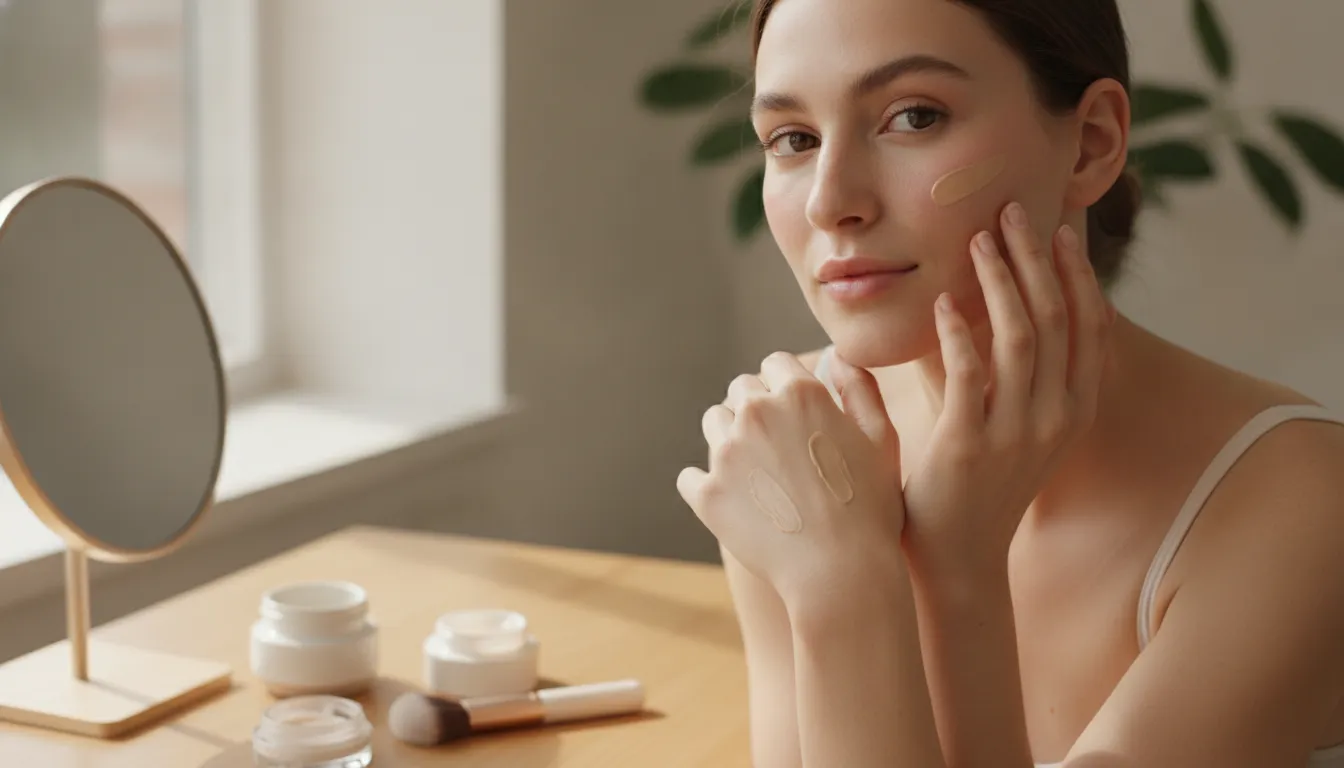
Use the following examples as a practical comparison set, not as a guarantee that any formula will suit every person.
For buildable face coverage
Flawless Serum Foundation offers buildable medium-to-full coverage and is available in 13 shades. The product page directs shoppers to shake the bottle, then apply it to the forehead, nose, cheeks, and chin with a brush or fingertips. Its listed ingredients include aloe juice, safflower seed oil, glycerin, grape seed oil, vitamin C, and plant-derived ingredients. Review the complete list if you know that particular botanicals, oils, or preservatives are not a good fit for you.
CC Cream Zinc SPF 30 is the lighter-coverage option in this group. The page describes light-to-medium coverage and lists mineral zinc oxide as the active ingredient. One layer is directed for more natural, lightweight coverage, while two layers provide medium coverage. Its ingredient list includes aloe juice, jojoba seed oil, hyaluronic acid, and plant extracts. Mineral SPF does not, by itself, establish that a formula will be comfortable for every sensitive-skin shopper.
For prep, color, and eyes
Illuminating Primer is described as silicone-free and can be worn alone or under makeup. The instructions call for one to two pumps blended into a thin layer on clean skin. The page lists aloe leaf juice, silica, glycerin, grape seed oil, witch hazel extract, hyaluronic acid, and other ingredients. If eye-area sensitivity is a concern, remember that face-area directions do not make a product an eye-safe guarantee.
Ultra-Natural Mascara is positioned for buildable volume, length, and a smooth coat. One coat is directed for natural definition; a second can be applied after the first dries for more volume and length. Juice Beauty also recommends replacing mascara every three months as it dries and becomes clumpy. Last Looks Cream Blush can be layered on cheeks, lips, and eyes, with sheer-to-bold color. Its listed formula includes coconut, castor, sunflower, jojoba, grape seed, and marula oils, plus shea butter.
Explore the broader Phyto-Pigments makeup collection after narrowing your options. Compare the intended use, finish, application directions, and complete ingredient list, then test cautiously rather than assuming that an organic or plant-based formula will suit every individual.
How Should You Read Ingredient Lists and Makeup Claims?
A product label gives you several different kinds of information, and each answers a different question. Start with the full ingredient list rather than relying on a short front-of-package phrase. Scan for ingredients you already know you do not tolerate, then note the formula's overall structure: pigments, oils or waxes, humectants, botanical extracts, preservatives, and any mineral sunscreen ingredients. A familiar ingredient is not automatically right or wrong for everyone. Ingredient tolerance is personal, so keep your own history in view.
It also helps to separate common makeup claims:
- Vegan describes the absence of animal-derived ingredients under the brand's stated standard. Juice Beauty documents AVA vegan credentials.
- Cruelty-free addresses animal testing, not whether a formula will feel comfortable on your skin. Juice Beauty documents Leaping Bunny cruelty-free status.
- Organic refers to how qualifying agricultural ingredients are produced and how the claim is substantiated. Juice Beauty documents credentials connected with the California Organic Products Act, or COPA.
- Mineral usually identifies a mineral ingredient or pigment. For example, the brand's CC Cream lists mineral zinc oxide SPF 30. Mineral does not mean every person will tolerate every other ingredient in the formula.
- Clean is a broad positioning term. Ask which ingredient standards and exclusions the brand actually defines instead of treating the word as a medical or sensitivity guarantee.
Juice Beauty describes its SuperJuice Complex as an organic botanical juice base, including grape, apple, aloe, and lemon juices. That is a formulation distinction, not proof that makeup cannot cause discomfort. Likewise, Phyto-Pigments refers to the brand's plant-pigment approach; it does not replace reading the product's complete label. You can evaluate makeup ingredients and clean standards or learn how Phyto-Pigments and synthetic dyes differ for more context.
Finally, do not turn a credential into a promise of universal comfort. The best makeup for sensitive skin is the product whose ingredients, intended use, and finish align with your personal history. If a formula causes discomfort, stop using it and seek professional guidance for persistent or severe reactions.
What Routine Can Help You Introduce New Makeup?
A careful routine can make it easier to identify what your skin tolerates and what may be contributing to discomfort. Ingredient tolerance is personal, so even makeup with organic, vegan, or cruelty-free positioning is not automatically right for every sensitive-skin shopper. Introduce products gradually, keep application tools clean, and pay attention to how your skin responds.
- Choose one new product. Start with the item that addresses your immediate goal, such as complexion coverage, color, or eye definition. Avoid changing your foundation, primer, blush, and mascara at the same time. If your skin reacts, one change makes the possible cause easier to narrow down.
- Read the directions and complete ingredient list. Follow the product page or package instructions for where and how much to apply. Review the full ingredient list against ingredients you already know your skin does not tolerate. Do not assume that a natural, mineral, organic, or clean-beauty label guarantees comfort.
- Consider a small-area check. The American Academy of Dermatology's guidance on testing skin-care products explains how to try a product on a small area before regular use. Follow the source's instructions rather than relying on an invented universal testing timeline. Take extra care around the eyes, where the skin and surrounding area may be especially reactive.
- Apply with clean hands and tools. Wash your hands before application, and clean reusable brushes, sponges, and other applicators according to their care instructions. Do not share eye makeup, mascara wands, brushes, or other products that contact the eye area. Keep containers closed when you are not using them.
- Observe your skin and stop if discomfort begins. If you notice stinging, burning, itching, swelling, unusual redness, or another concerning change, stop using the new product. Do not keep applying it to see whether your skin will simply adjust. If symptoms are persistent, severe, involve significant swelling, or affect the eyes, seek qualified medical care promptly.
- Only then add another product. Once you have decided a product is workable for your routine, introduce the next item separately. Keep a simple note of the product, application area, and any response so you can make a more informed choice when comparing makeup for sensitive skin.
What Should You Do for Sensitive Eyes, Redness, Acne, or Dryness?
The right makeup choice depends on where you plan to use it and what your skin is communicating. Sensitive eyes call for a separate review of eye-area formulas, application tools, and mascara hygiene. Redness or uneven tone may lead you to consider complexion coverage, but color correction is a makeup goal, not a promise to resolve an underlying skin concern. Acne-prone skin and dryness also call for different questions about texture, removal, and which ingredients you already know your skin tolerates.
Start by separating these decisions:
- Makeup use: Choose a format, shade, and level of coverage that suits the look you want. A light-to-medium complexion product may feel preferable for one person, while another may want buildable coverage for uneven tone.
- Formula review: Read the complete ingredient list for every product, including familiar categories such as mascara, blush, primer, and foundation. Vegan, cruelty-free, and organic credentials describe different standards; none can establish that a formula will suit every individual.
- Skin or eye care: Persistent, painful, severe, or worsening symptoms are not makeup-selection problems. A qualified medical professional can help assess them and advise whether makeup should be paused.
For the eye area, use clean tools and follow the product's replacement guidance. Juice Beauty's Ultra-Natural Mascara page specifies replacing mascara every three months, but that product information is not a guarantee for sensitive eyes. If a product causes discomfort, stop using it rather than trying to work around the reaction.
For redness, acne-prone skin, dryness, or uneven tone, compare the stated use of a product with your own needs and history. Do not assume that mineral ingredients, plant-derived ingredients, or a product marketed for a particular finish automatically make it suitable for you. You can browse the sensitive-skin collection as a starting point, then review each product's current details and full ingredient list. For broader guidance on evaluating formulas, read how to evaluate makeup ingredients.
If you are trying something new, consider a small-area test first and introduce one product at a time. The American Academy of Dermatology offers small-area testing guidance; follow professional advice if you have a known allergy or ongoing reaction.
Explore the Phyto-Pigments makeup collection
Frequently Asked Questions About the Best Makeup for Sensitive Skin
What should you look for in makeup for sensitive skin?
Start with the full ingredient list, the product's intended use, and your own known triggers. Consider whether you need complexion, color, primer, or eye makeup, then introduce one new product at a time. Organic, vegan, and cruelty-free describe different standards, not a guarantee of personal tolerance.
Is mineral makeup always better for sensitive skin?
No. Mineral makeup may appeal to shoppers who prefer particular mineral ingredients, but the word mineral does not establish that a formula will work for every person. Compare the complete ingredient list, intended use, texture, and your past experience instead of relying on a category label.
Does hypoallergenic makeup guarantee that you will not react?
No. Hypoallergenic is not a promise that a product cannot cause discomfort or a reaction. Ingredient tolerance is individual, and broad claims should not replace reviewing the ingredient list or following a cautious introduction routine.
How should you patch test new makeup?
Apply a small amount to a limited area as directed and observe how your skin responds before expanding use. The American Academy of Dermatology Association recommends testing skin-care products on a small area first: AAD patch-testing guidance. Stop using a product if discomfort develops.
What makeup is appropriate for sensitive eyes?
Choose products specifically intended for the eye area, check the complete ingredient list, and keep applicators clean. Introduce one eye product at a time, avoid applying makeup to irritated skin, and stop use if discomfort occurs. Persistent or severe symptoms warrant professional medical guidance.
Ready to explore makeup for sensitive skin?
Finding the right makeup can be a gradual process. Review each product's current use, ingredients, and directions so you can choose options that fit your routine and personal tolerance.